Tech, Talent, and Transformation: What the World May Look Like by 2050
Looking toward 2050 is no longer speculative, the forces shaping the next 25 years are already here. AI, demographic shifts, energy constraints, and global connectivity are redefining how technology is built and how work is organized. Understanding these trends is essential to building and scaling modern engineering teams.

Artificial Intelligence and the Future of Work
From Automation to Collaboration
Artificial intelligence is expected to become deeply embedded across nearly every industry by 2050. Rather than existing as a separate layer, AI systems will increasingly operate inside everyday tools and workflows. The progression is already visible: early automation handled repetitive tasks, machine learning introduced pattern recognition and prediction, and today’s AI systems assist with reasoning, synthesis, and decision support.
As AI tools move deeper into everyday workflows, their impact is increasingly measured in productivity rather than novelty. Sam Altman has argued that the most immediate effect of advanced AI will be a sharp increase in individual output, enabling smaller teams to accomplish work that previously required much larger organizations. This reinforces a shift already underway in engineering: success is becoming less about scale and more about leverage, judgment, and system design.
Engineering teams are already experiencing this transition. Code generation, testing, documentation, and system monitoring are becoming AI-assisted. Over time, engineers will spend less effort on repetitive execution and more time on system design, oversight, and complex problem solving.
Some widely expected outcomes include:
- AI-assisted development becoming a default part of engineering workflows
- Faster iteration cycles driven by automated testing and review
- Greater emphasis on architectural thinking and system reliability
For distributed teams, this shift lowers barriers to collaboration. Engineers working across time zones will increasingly rely on shared AI tools to maintain context and continuity without constant synchronous communication.
Performance Over Headcount
As AI becomes more capable, organizations are beginning to optimize less for headcount and more for output. By 2050, performance per engineer may matter far more than team size. Small, highly effective teams augmented by AI systems could outperform much larger organizations built around manual coordination.
This changes how companies think about scaling. Growth will no longer mean hiring more people by default, but improving systems, tooling, and decision velocity. For engineering leaders, the focus will shift toward:
- Leverage per engineer
- Quality of decision-making
- Resilience and maintainability of systems
In this environment, structure and clarity matter as much as raw talent.
Toward More Capable AI Systems
Long-term forecasts suggest that increasingly general AI systems may emerge later this century. While timelines vary, most researchers agree that machine intelligence will continue to expand in scope and capability well before 2050.
Geoffrey Hinton has repeatedly warned that AI systems may eventually exceed human intelligence in many domains, emphasizing the need for caution and alignment. Others, including leaders at OpenAI, DeepMind, and academic institutions, frame the development of artificial general intelligence (AGI) as a profound transition rather than a single breakthrough moment.
While capability continues to advance, concerns around control and alignment remain central. Yoshua Bengio has consistently emphasized that technical progress must be paired with strong safety research and governance structures. He has warned that deploying increasingly autonomous systems without sufficient oversight risks unintended consequences, particularly as AI begins to influence critical infrastructure and economic systems.
From AI to AGI
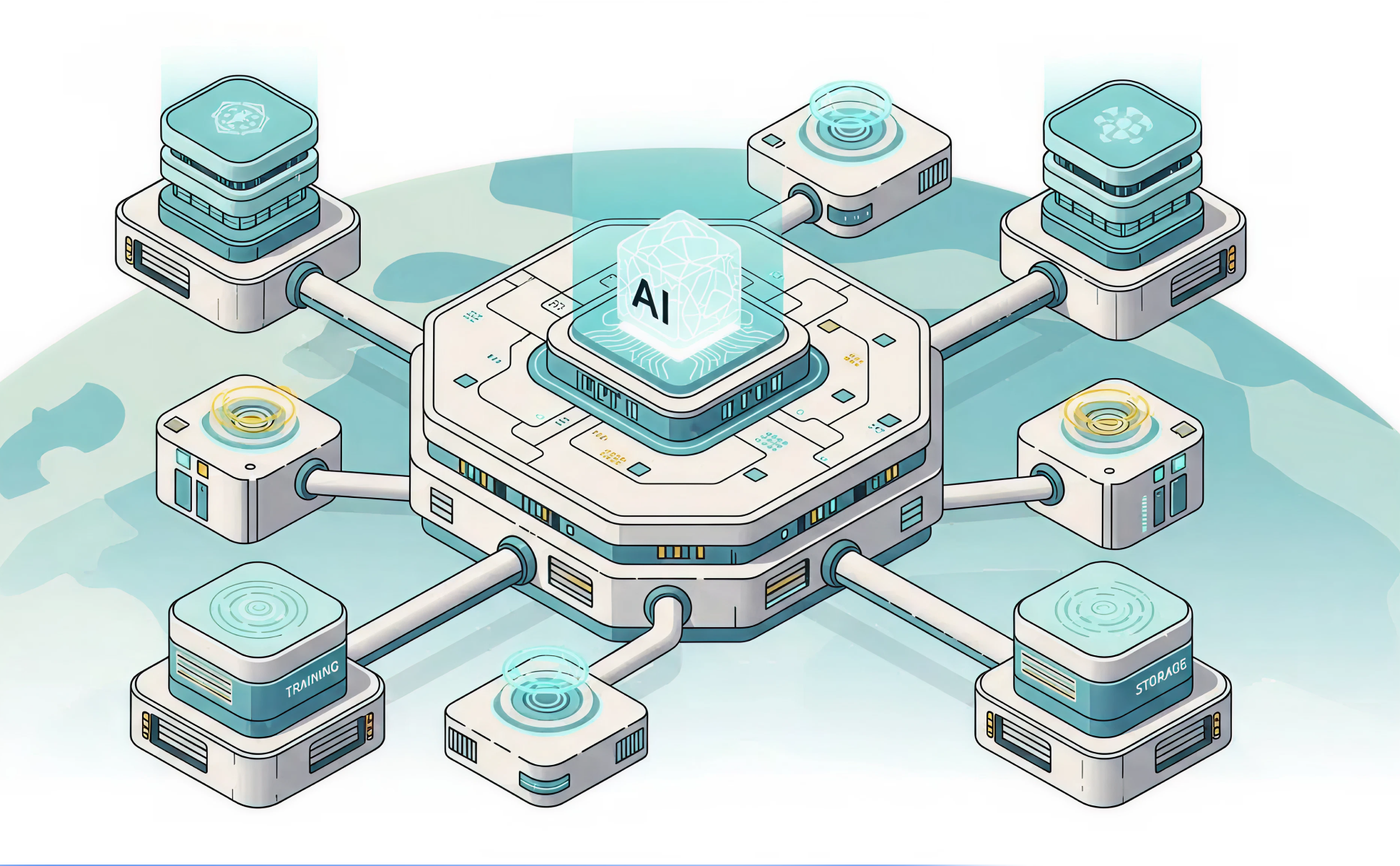
The evolution from automation to machine learning to AI has been incremental. The next leap, toward AGI, is fundamentally different. AGI implies systems that can transfer learning across domains, reason abstractly, and adapt without task-specific retraining.
Whether AGI arrives before or after 2050 remains debated. What is clearer is that organizations must prepare for systems that are increasingly autonomous and influential. This reinforces the need for engineering teams to design workflows that integrate AI responsibly, with clear human oversight, accountability, and fail-safes.
Across these perspectives, there is less agreement on timelines than on direction: AI systems will become more capable, more embedded, and more consequential, well before 2050.
For Carbon, this means helping teams build not only with AI, but alongside it, ensuring humans remain responsible for outcomes even as systems grow more capable.
Robotics, Automation, and the Physical World
Humanoid Robots and Embodied AI
While much attention is focused on software, advances in robotics suggest that physical automation will also accelerate. Humanoid robots, capable of navigating human environments, are being actively developed by major technology companies and research labs.
By 2050, robots may play meaningful roles in logistics, healthcare support, construction, and elder care. These systems will blend physical capability with AI-driven perception and decision-making, creating new categories of work and new engineering challenges.
For software teams, this convergence means tighter integration between digital systems and the physical world. Reliability, safety, and real-time responsiveness will become even more critical.
Demographics and the Global Talent Landscape
Aging Economies and Expanding Workforces
By 2050, global population growth will be uneven. Many advanced economies are expected to experience shrinking or aging workforces, while regions in Africa, South Asia, and parts of Latin America continue to grow. These demographic shifts will directly impact where technical talent emerges and how companies source skills.
Key implications include:
- Increased competition for senior talent in aging economies
- Rising importance of emerging markets as sources of engineering expertise
- Greater reliance on cross-border and nearshore hiring models
Technology enables these transitions. Reliable connectivity and collaboration tools allow companies to access talent wherever it exists, rather than concentrating teams in a small number of hubs.
Remote Work as a Structural Norm
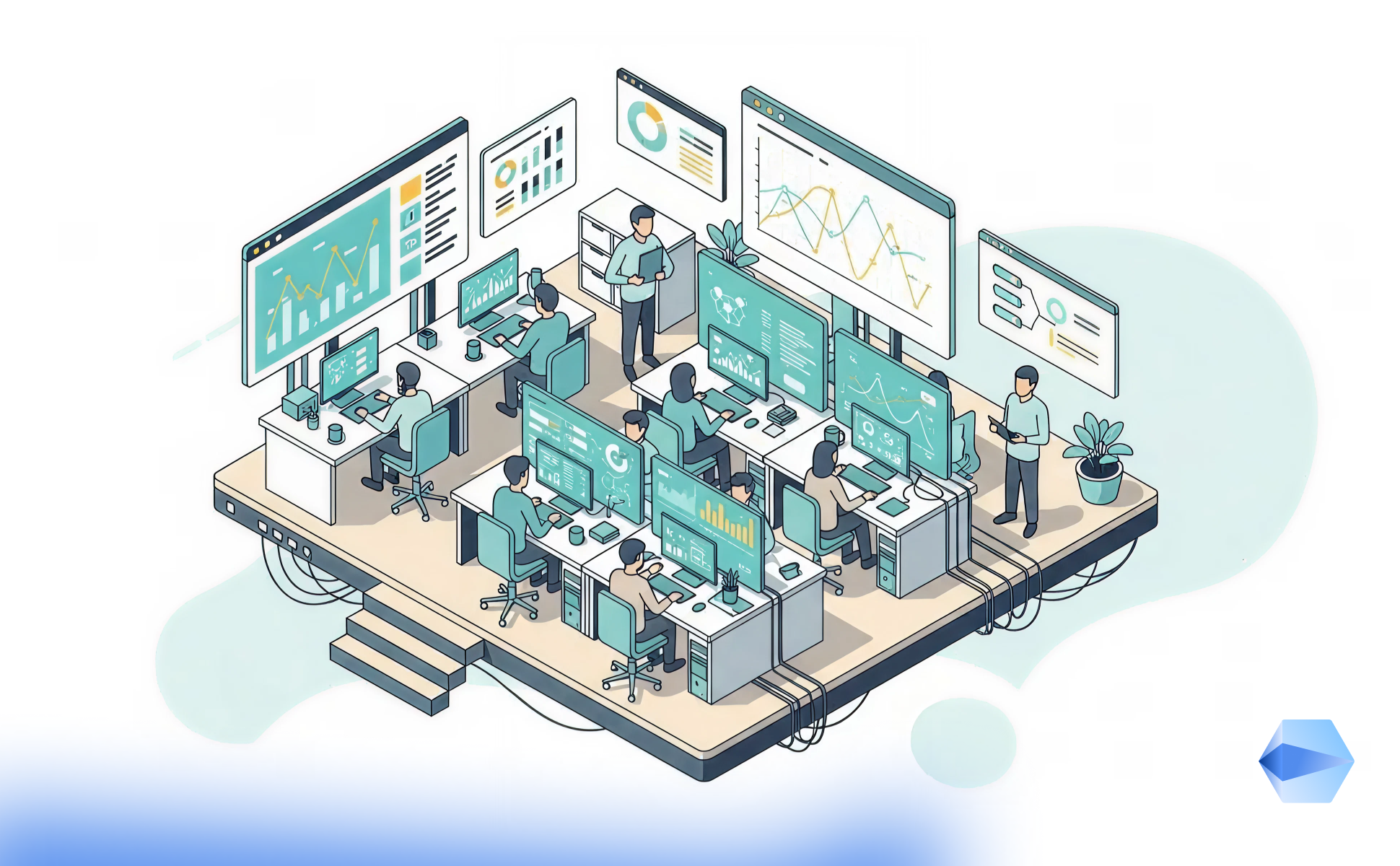
Remote and distributed work is likely to be a permanent feature of the global economy by 2050. Rather than an exception, it will be the default operating model for many technology teams. This places greater importance on systems that support clarity, ownership, and knowledge transfer.
Carbon’s focus on structured team building aligns directly with this future. As work becomes more distributed, companies will need partners who can help design teams that function effectively across borders and cultures.
Energy, Infrastructure, and the Cost of Computation
AI, Energy Demand, and Data Centers
As AI adoption accelerates, energy consumption will become a defining constraint. Data centers already consume a significant share of global electricity, and AI workloads are substantially more energy-intensive than traditional computing.
By 2050, AI-driven infrastructure could require:
- Massive increases in grid capacity
- Regional specialization based on energy availability
- New approaches to efficiency at the software and hardware levels
This has renewed interest in nuclear energy, particularly small modular reactors, as a stable power source for data centers. Renewable energy will play a critical role, but base-load power will be essential for always-on computation.
Engineering teams will increasingly need to consider energy efficiency as part of system design, not just an operational afterthought.
AI-Enabled Hardware
Hardware innovation will be as important as software progress. Specialized AI chips, edge computing devices, and energy-efficient architectures will shape what systems are feasible.
Optimizing workloads for hardware capabilities will become a core engineering skill, influencing everything from model design to system architecture.
Governance, Ethics, and Responsibility
As technology becomes more powerful, governance frameworks will play a larger role in shaping outcomes. AI regulation, data protection, and ethical standards will influence how systems are designed and deployed.
Calls for stronger governance are growing louder as AI systems gain influence. Bengio and other researchers have argued that regulation and shared standards are not barriers to innovation, but prerequisites for sustainable progress. By 2050, engineering teams may be expected to design systems that are not only efficient and scalable, but also auditable, explainable, and aligned with societal norms.
Engineering teams will need to incorporate these considerations early in development cycles rather than treating them as afterthoughts. Transparency, auditability, and explainability will become competitive advantages.
To Conclude
By 2050, success in technology will depend on more than technical capability alone. Organizations will need to design systems that can adapt to continuous change, support distributed collaboration, and integrate increasingly capable machines with clear human ownership. Teams that invest early in structure, clarity, and responsible use of technology will be better positioned to navigate uncertainty, regardless of how quickly or unevenly these shifts unfold.

Carbon is the go-to staffing specialist for Eastern European and North African technical talent. Trusted by the biggest names in technology and venture capital, Carbon’s hyperlocal expertise makes entering new talent markets for value-seeking global companies possible.
Honouring exceptional talent ®
References
Altman, S. (2021–2024). Moore’s Law for Everything [Blog essays and public commentary]. OpenAI.
Bengio, Y. (2023). AI safety, alignment, and governance. Public statements, academic talks, and policy submissions by Yoshua Bengio.
Hinton, G. (2023). Risks and trajectories of advanced artificial intelligence. Public lectures and interviews by Geoffrey Hinton.
DeepMind. (2018–2024). Research on general-purpose learning systems and embodied AI. Peer-reviewed publications and technical reports.
OpenAI. (2020–2024). AI systems, productivity, and deployment at scale. Technical reports, system cards, and public research notes.
United Nations, Department of Economic and Social Affairs. (2022). World population prospects 2022. UN DESA.