Nearshoring vs Offshoring in 2025: Why Europe Leads the Future of Engineering and How BOT Models Are Reshaping Global Teams
Engineering strategy has shifted from outsourcing to ownership.This article explores how Europe, especially Central and Eastern Europe, has become the world’s most dynamic nearshore ecosystem, and why Build-Operate-Transfer models now define how global companies scale engineering capability.

For much of the last two decades, the global software delivery conversation revolved around one question: where can we hire engineers most cost effectively? In 2025, the economics, operating models, and strategic priorities of engineering organizations have changed dramatically. AI has altered productivity expectations, remote work has become permanent, and Europe, especially Central and Eastern Europe (CEE), has grown into one of the most powerful engineering ecosystems in the world.
Today, the decision between nearshoring and offshoring is no longer only about labor rates. It is about decision velocity, cultural alignment, long term ownership of capability, and the structural design of engineering teams. Increasingly, it is also about the Build Operate Transfer (BOT) model, which allows companies to convert distributed teams into fully owned, high performing engineering hubs.
Europe is now central to this shift.
Europe, The Global Engineering Powerhouse
Europe's engineering landscape has expanded faster than any other region in the world. According to Eurostat, the EU now employs more than 10 million ICT specialists, which represents about 5 percent of the entire workforce and a 62 percent increase since 2014 (Eurostat, 2024). This growth reflects a region that has moved from being a secondary market to becoming one of the most important technology talent corridors on the planet.
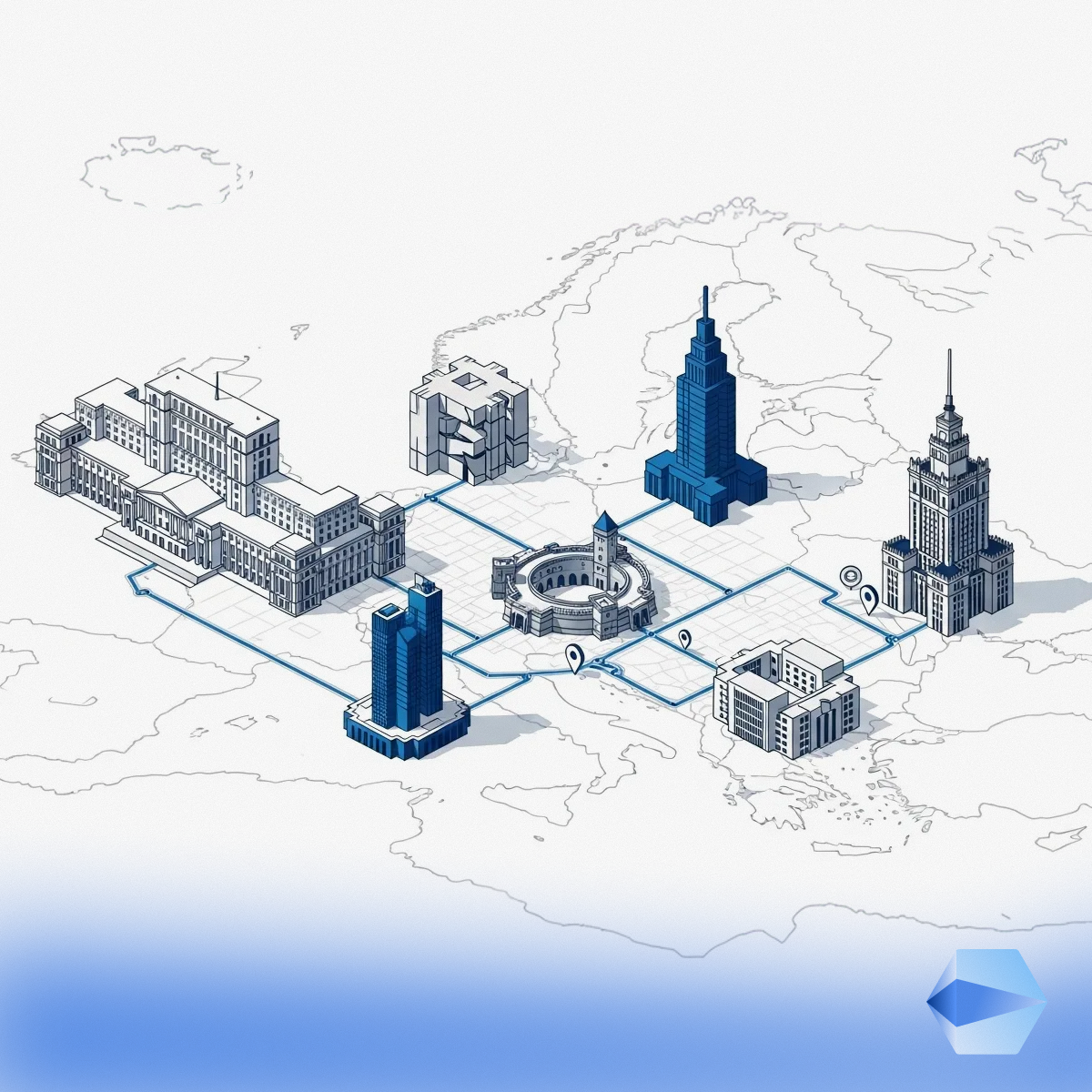
Within Europe, the CEE region stands out. Poland, Romania, Bulgaria, Czechia, and the Baltic states consistently produce highly skilled engineers with strong English proficiency, Western aligned work styles, and mature product development mindsets. Their technical education systems are stable and competitive, and their operating environments are trusted by global enterprises.
What differentiates Europe most clearly is operational compatibility. Work culture, communication style, code quality expectations, and leadership norms closely resemble those of Western Europe and the United States. This compatibility reduces friction and accelerates execution. Nearshore European teams often behave far more like internal engineering teams than like traditional outsourced vendors.
This is why nearshoring in Europe has become a strategic choice rather than a cost saving tactic.
Why Time Zones Still Drive Engineering Velocity in 2025
AI has made engineers faster. It has automated routine tasks, provided instant scaffolding for new features, and reduced the time needed for certain types of code generation. Even in this environment, the core activities that define product engineering still rely on real time collaboration. Discovery work, architectural design, stakeholder alignment, technical reviews, priority setting, and iterative decision making all benefit strongly from overlap in working hours.
This is the single biggest reason companies continue to prefer European nearshoring. Teams in CEE share almost a full workday with Western Europe and several hours with US East Coast teams. This overlap removes the 24 to 48 hour delays that can occur when teams are distributed across opposite time zones.
The challenges of asynchronous work remain significant. The StackOverflow 2024 Developer Survey found that async communication and requirement ambiguity are among the top friction points for engineers in fully distributed teams. Gartner's 2024 software development guidance also observed that teams performing design heavy or collaborative tasks achieve higher success rates when they can meet in real time.
Time remains a critical variable in software development. Europe offers the strongest alignment of talent depth and time zone proximity anywhere in the world.
Offshoring in 2025 Still Matters
Offshoring remains an essential part of global engineering strategy. India, Vietnam, and the Philippines supply enormous pools of skilled engineers, making them ideal for large scale programes, structured development, platform engineering, QA automation, and data pipelines.
The cost environment has become even more attractive. The Accelerance 2025 Global Software Outsourcing Trends report found that offshore rates decreased by 9 to 16 percent across many markets due to AI driven productivity gains and stronger competition among vendors.
However, companies must now navigate more complex security and compliance considerations. Reuters reported in 2024 that Mexico's nearshoring boom correlated with rising cybercrime exposure, which led companies to strengthen device security standards, SOC 2 and ISO certification expectations, and access governance requirements.
In practice, offshoring works best for execution heavy work streams with clear specification. Nearshoring in Europe works best for discovery oriented work and stakeholder dependent collaboration. The hybrid models many companies use blend offshore capacity with nearshore European leadership and context holding roles.
This is where B-O-T models create a distinct long term advantage.
B-O-T Converts Nearshore Strength into Permanent Engineering Capability
Traditional outsourcing carries an inherent tension. Vendors optimize for revenue retention, while companies optimize for engineering velocity and capability building. This misalignment slows progress, weakens accountability, and reduces long term knowledge retention.
The Build-Operate-Transfer model removes this tension. Under a B-O-T partnership, Carbon builds and operates a dedicated engineering center for a client using the client's processes, culture, standards, and leadership principles. Once the team reaches maturity, ownership is transferred to the client.
This has several transformational effects.
First, it creates structural consistency because the team follows the client's engineering practices from day one. Second, it preserves institutional knowledge because the team makes the transition from external to internal without losing context. Third, it improves cost efficiency over time because vendor margins disappear after transfer. Finally, it aligns with Carbon's long standing mission of helping companies build engineering capability in Europe rather than renting talent indefinitely.
European nearshore locations are especially well suited to B-O-T structures. The region provides stable employment frameworks, high English proficiency, Western aligned work culture, strong engineering education, and easy travel from Western Europe. These conditions allow B-O-T teams to become natural extensions of home engineering teams rather than temporary external groups.
Why Europe Is the Rational Home for Future Engineering Hubs
As global companies increasingly seek to build engineering capabilities that they can eventually own, Europe offers a unique combination of benefits. Its regulatory environment is transparent and predictable. Its engineering culture is mature and aligned with Western standards. Its universities and training institutions continuously produce strong technical talent, and its proximity to key markets enables smooth integration with headquarters.
In this environment, B-O-T becomes more than an operating model. It becomes a long term investment in capability. Companies build nearshore hubs that support their current roadmap, and eventually grow into strategic engineering centers in their own right.
Offshore markets continue to play an important role, but when the strategic question shifts from "where can we outsource" to "where can we build something permanent", Europe provides the clearest answer.
The New Engineering Strategy, Build Capability Not Dependency
The biggest shift in 2025 is the move away from thinking about nearshore versus offshore as a cost comparison. The more strategic question is: where can a company establish engineering capability that compounds value, retains knowledge, and drives long term product excellence.
Nearshoring in Europe supports this by offering speed, alignment, and culture fit. Offshoring supports this by offering scale and cost efficiency. B-O-T merges both into a single pathway that allows companies to build, scale, and eventually internalize global engineering teams.
This is our driving force at Carbon. We help companies build high performing engineering hubs in Europe that begin quickly, scale predictably, and eventually become fully owned parts of the organization's DNA. We do this while supporting the development of Europe's engineering ecosystems and reducing brain drain across the region.
2025 is not the year of choosing nearshore or offshore. It is the year companies decide whether to rent capability or build it.

Carbon is the go-to staffing specialist for Eastern European and North African technical talent. Trusted by the biggest names in technology and venture capital, Carbon’s hyperlocal expertise makes entering new talent markets for value-seeking global companies possible.
Honouring exceptional talent ®
References
Eurostat (2024). ICT Specialists in Employment 2014 to 2024. (1)
Accelerance (2025). Global Software Outsourcing Trends Report. (2)
StackOverflow (2024). Developer Survey 2024.
Gartner (2024). Software Development Insights and Time Zone Overlap Findings.
Reuters (2024). Reporting on Cybersecurity Risks in Mexico's Nearshoring Growth. (3)